Economic Growth in a Time of Intelligent Technology: Who Benefits, Who Bears the Cost?
Kenya’s economic conversation is often framed around growth figures, fiscal policy, and infrastructure investment. Yet beneath these familiar indicators, a quieter transformation is unfolding. Intelligent technologies are reshaping how value is produced, how work is organized, and how economic advantage is distributed. This shift is not occurring in the future; it is already embedded in daily economic activity. The pressing issue is not whether growth will continue, but what kind of growth is being produced, and for whom.
Technology has always influenced economic development, but intelligent systems introduce a qualitative change. Automation, data analytics, and algorithmic decision-making do more than increase efficiency; they alter power relationships within the economy. Firms that control data and technology gain leverage. Workers whose skills align with digital systems see rising demand. Others, particularly in labor-intensive and informal sectors, experience growing insecurity as traditional forms of work lose value.
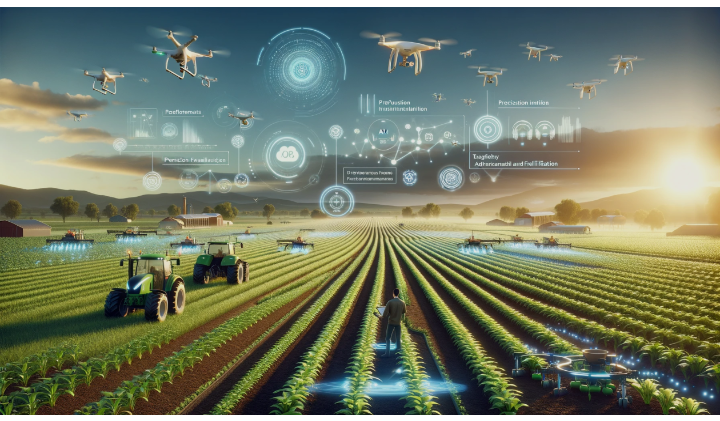
This tension is visible across Kenya’s economy. In agriculture, mechanization improves output but reduces reliance on manual labor. In finance, digital lending expands access while embedding algorithmic judgment into credit decisions. In retail and transport, platforms reorganize markets, lowering entry barriers for some while intensifying competition for many. These changes generate productivity, yet they also redistribute risk downward, often without adequate safeguards.
The informal economy illustrates this paradox clearly. Long viewed as a buffer against unemployment, it is now increasingly shaped by digital systems it does not control. Mobile payments, platform-based work, and algorithmic coordination introduce efficiency and scale, but they also erode autonomy and bargaining power. When pricing, visibility, and access are mediated by systems workers cannot influence, economic participation becomes more precarious, even as activity increases.
This raises a fundamental economic question: can growth driven by intelligent technology remain stable without deliberate inclusion? History suggests otherwise. Economies that grow while concentrating gains tend to accumulate social and political pressure. Productivity without shared benefit weakens trust, reduces resilience, and ultimately constrains growth itself.
What is often missing from the discussion is transition planning. Intelligent technology does not simply replace tasks; it redefines skills and reorganizes labor demand. Yet economic policy frequently treats displacement as an individual problem rather than a structural one. Workers are expected to adapt on their own, even when access to training, capital, and alternative employment is uneven. This approach externalizes the cost of progress, masking it as inevitability.
A more sustainable economic strategy would recognize adaptability as a core asset. Investment in lifelong learning, and workforce mobility should be viewed not as social expenditure, but as productivity infrastructure. Economies that can redeploy talent quickly are better positioned to absorb technological shocks. Those that cannot risk stagnation beneath the appearance of growth.
Equally important is how success is measured. GDP growth and output gains remain important, but they are incomplete indicators in an economy shaped by intelligent systems. Measures of job quality, income stability, and access to opportunity matter just as much. An economy that grows rapidly while increasing insecurity is not robust; it is fragile.
Kenya’s past experience shows that technology can support inclusive growth when it aligns with everyday economic realities. The challenge now is scale and complexity. Intelligent technology operates faster, affects more sectors simultaneously, and concentrates decision-making power. Without intentional governance, it can entrench inequality rather than reduce it.
This does not argue against innovation. On the contrary, innovation remains essential. But innovation without institutional foresight is unstable. Markets alone cannot manage transitions of this magnitude. Government, education systems, and industry must act in coordination, ensuring that productivity gains are reinvested in people and communities rather than extracted without replacement.
Ultimately, the economic question posed by intelligent technology is not technical. It is structural and moral. What kind of economy is being built when efficiency becomes the primary measure of success? Who absorbs risk, and who captures reward? Growth that overlooks these questions may appear successful in the short term, but it carries hidden costs that surface later as instability.
Kenya stands at a point where economic choices will have long-lasting consequences. Intelligent technology can deepen inequality or support shared prosperity. It can weaken livelihoods or expand opportunity. The difference lies not in the sophistication of the tools, but in the intent guiding their use.
In an age of intelligent technology, economic strength is no longer defined solely by how fast an economy grows, but by how well it sustains people through change. Growth that cannot carry its citizens forward is not progress; it is postponement.
Kenya’s economic conversation is often framed around growth figures, fiscal policy, and infrastructure investment. Yet beneath these familiar indicators, a quieter transformation is unfolding. Intelligent technologies are reshaping how value is produced, how work is organized, and how economic advantage is distributed. This shift is not occurring in the future; it is already embedded in daily economic activity. The pressing issue is not whether growth will continue, but what kind of growth is being produced, and for whom.
Technology has always influenced economic development, but intelligent systems introduce a qualitative change. Automation, data analytics, and algorithmic decision-making do more than increase efficiency; they alter power relationships within the economy. Firms that control data and technology gain leverage. Workers whose skills align with digital systems see rising demand. Others, particularly in labor-intensive and informal sectors, experience growing insecurity as traditional forms of work lose value.
This tension is visible across Kenya’s economy. In agriculture, mechanization improves output but reduces reliance on manual labor. In finance, digital lending expands access while embedding algorithmic judgment into credit decisions. In retail and transport, platforms reorganize markets, lowering entry barriers for some while intensifying competition for many. These changes generate productivity, yet they also redistribute risk downward, often without adequate safeguards.
The informal economy illustrates this paradox clearly. Long viewed as a buffer against unemployment, it is now increasingly shaped by digital systems it does not control. Mobile payments, platform-based work, and algorithmic coordination introduce efficiency and scale, but they also erode autonomy and bargaining power. When pricing, visibility, and access are mediated by systems workers cannot influence, economic participation becomes more precarious, even as activity increases.
This raises a fundamental economic question: can growth driven by intelligent technology remain stable without deliberate inclusion? History suggests otherwise. Economies that grow while concentrating gains tend to accumulate social and political pressure. Productivity without shared benefit weakens trust, reduces resilience, and ultimately constrains growth itself.
What is often missing from the discussion is transition planning. Intelligent technology does not simply replace tasks; it redefines skills and reorganizes labor demand. Yet economic policy frequently treats displacement as an individual problem rather than a structural one. Workers are expected to adapt on their own, even when access to training, capital, and alternative employment is uneven. This approach externalizes the cost of progress, masking it as inevitability.
A more sustainable economic strategy would recognize adaptability as a core asset. Investment in lifelong learning, and workforce mobility should be viewed not as social expenditure, but as productivity infrastructure. Economies that can redeploy talent quickly are better positioned to absorb technological shocks. Those that cannot risk stagnation beneath the appearance of growth.
Equally important is how success is measured. GDP growth and output gains remain important, but they are incomplete indicators in an economy shaped by intelligent systems. Measures of job quality, income stability, and access to opportunity matter just as much. An economy that grows rapidly while increasing insecurity is not robust; it is fragile.
Kenya’s past experience shows that technology can support inclusive growth when it aligns with everyday economic realities. The challenge now is scale and complexity. Intelligent technology operates faster, affects more sectors simultaneously, and concentrates decision-making power. Without intentional governance, it can entrench inequality rather than reduce it.
This does not argue against innovation. On the contrary, innovation remains essential. But innovation without institutional foresight is unstable. Markets alone cannot manage transitions of this magnitude. Government, education systems, and industry must act in coordination, ensuring that productivity gains are reinvested in people and communities rather than extracted without replacement.
Ultimately, the economic question posed by intelligent technology is not technical. It is structural and moral. What kind of economy is being built when efficiency becomes the primary measure of success? Who absorbs risk, and who captures reward? Growth that overlooks these questions may appear successful in the short term, but it carries hidden costs that surface later as instability.
Kenya stands at a point where economic choices will have long-lasting consequences. Intelligent technology can deepen inequality or support shared prosperity. It can weaken livelihoods or expand opportunity. The difference lies not in the sophistication of the tools, but in the intent guiding their use.
In an age of intelligent technology, economic strength is no longer defined solely by how fast an economy grows, but by how well it sustains people through change. Growth that cannot carry its citizens forward is not progress; it is postponement.