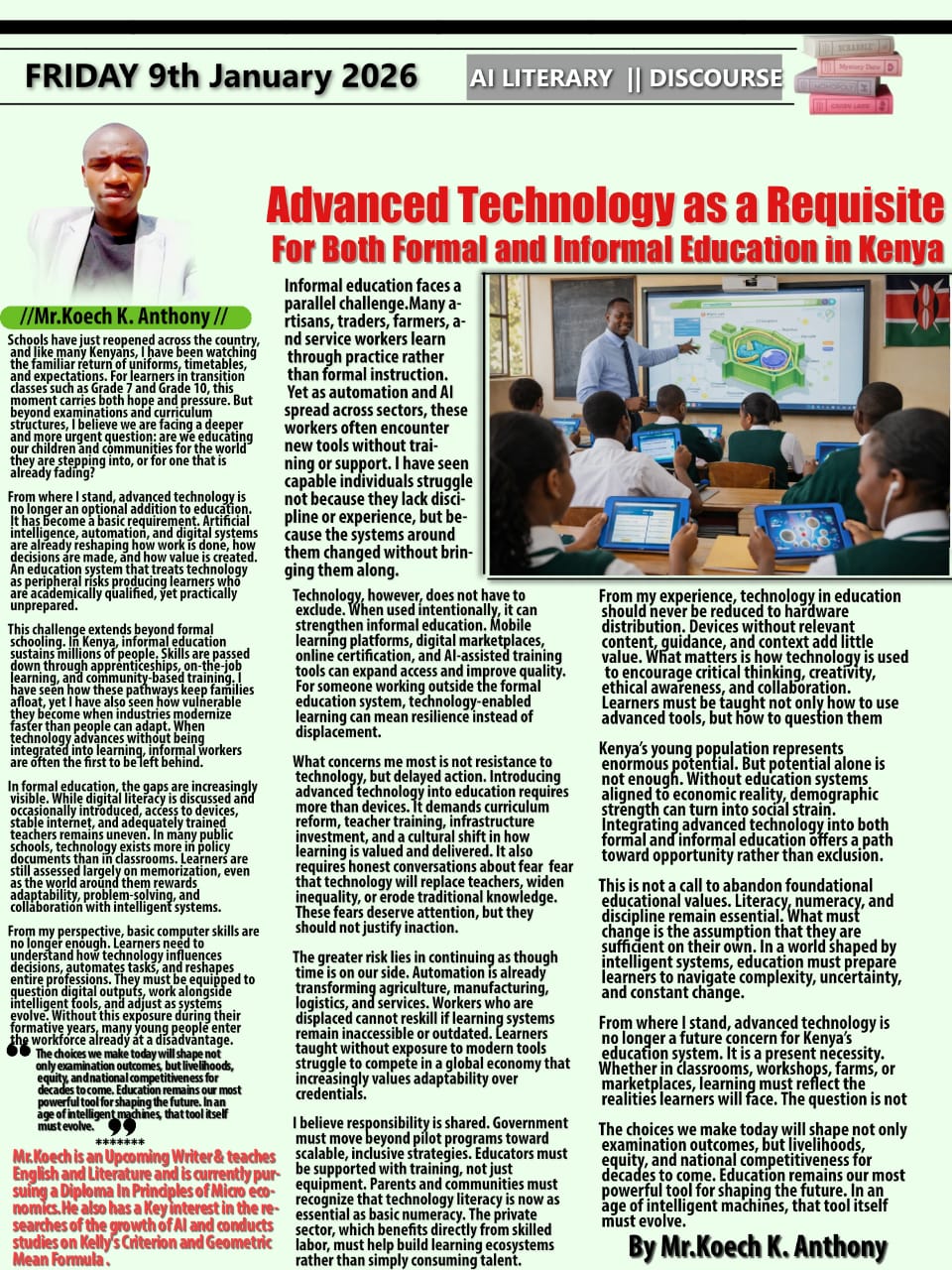
Industrial revolutions have never been singular events. They unfold as long processes in which technology, power, labor, and culture are reconfigured together. Each revolution has altered not only how goods are produced, but how societies organize work, assign value, and understand human purpose within economic systems. While the tools have changed across centuries, the underlying tensions have remained strikingly consistent.
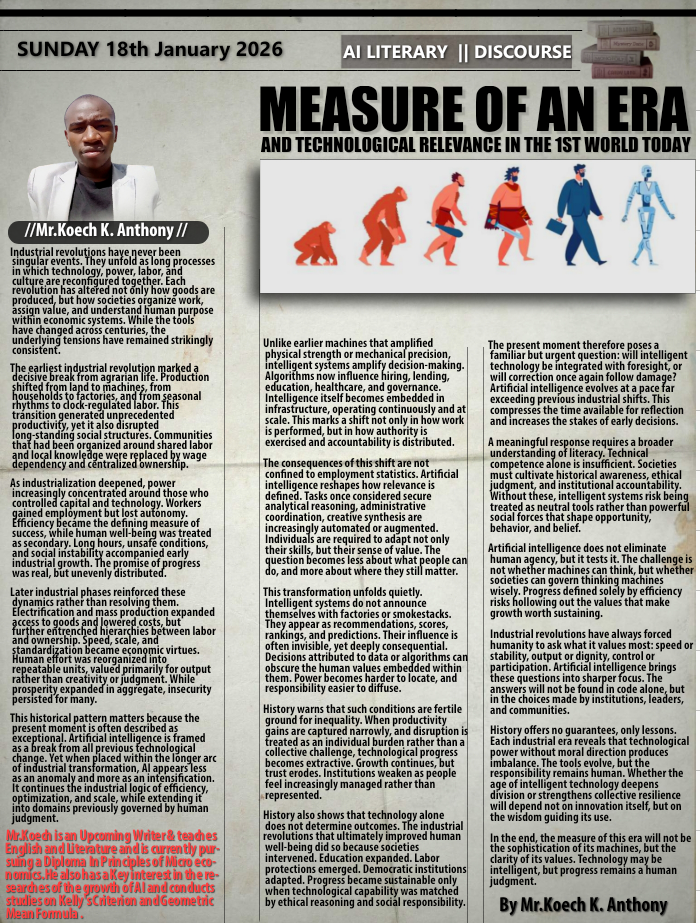
The earliest industrial revolution marked a decisive break from agrarian life. Production shifted from land to machines, from households to factories, and from seasonal rhythms to clock-regulated labor. This transition generated unprecedented productivity, yet it also disrupted long-standing social structures. Communities that had been organized around shared labor and local knowledge were replaced by wage dependency and centralized ownership. Economic growth accelerated, but social cohesion weakened under the strain.
As industrialization deepened, power increasingly concentrated around those who controlled capital and technology. Workers gained employment but lost autonomy. Efficiency became the defining measure of success, while human well-being was treated as secondary. Long hours, unsafe conditions, and social instability accompanied early industrial growth. The promise of progress was real, but unevenly distributed.
Later industrial phases reinforced these dynamics rather than resolving them. Electrification and mass production expanded access to goods and lowered costs, but further entrenched hierarchies between labor and ownership. Speed, scale, and standardization became economic virtues. Human effort was reorganized into repeatable units, valued primarily for output rather than creativity or judgment. While prosperity expanded in aggregate, insecurity persisted for many.
Notably, social protections did not emerge alongside innovation. Labor rights, public education systems, and regulatory frameworks were responses to crisis, not foresight. Reforms followed unrest, exploitation, and visible harm. History therefore records a recurring sequence: technological acceleration, concentrated benefit, social strain, and delayed institutional correction. Industrial revolutions advanced faster than societies learned to govern them.
This historical pattern matters because the present moment is often described as exceptional. Artificial intelligence is framed as a break from all previous technological change. Yet when placed within the longer arc of industrial transformation, AI appears less as an anomaly and more as an intensification. It continues the industrial logic of efficiency, optimization, and scale, while extending it into domains previously governed by human judgment.
Unlike earlier machines that amplified physical strength or mechanical precision, intelligent systems amplify decision-making. Algorithms now influence hiring, lending, education, healthcare, and governance. Intelligence itself becomes embedded in infrastructure, operating continuously and at scale. This marks a shift not only in how work is performed, but in how authority is exercised and accountability is distributed.
The consequences of this shift are not confined to employment statistics. Artificial intelligence reshapes how relevance is defined. Tasks once considered secure—analytical reasoning, administrative coordination, creative synthesis—are increasingly automated or augmented. Individuals are required to adapt not only their skills, but their sense of value. The question becomes less about what people can do, and more about where they still matter.
This transformation unfolds quietly. Intelligent systems do not announce themselves with factories or smokestacks. They appear as recommendations, scores, rankings, and predictions. Their influence is often invisible, yet deeply consequential. Decisions attributed to data or algorithms can obscure the human values embedded within them. Power becomes harder to locate, and responsibility easier to diffuse.
History warns that such conditions are fertile ground for inequality. When productivity gains are captured narrowly, and disruption is treated as an individual burden rather than a collective challenge, technological progress becomes extractive. Growth continues, but trust erodes. Institutions weaken as people feel increasingly managed rather than represented.
History also shows that technology alone does not determine outcomes. The industrial revolutions that ultimately improved human well-being did so because societies intervened. Education expanded. Labor protections emerged. Democratic institutions adapted. Progress became sustainable only when technological capability was matched by ethical reasoning and social responsibility.
The present moment therefore poses a familiar but urgent question: will intelligent technology be integrated with foresight, or will correction once again follow damage? Artificial intelligence evolves at a pace far exceeding previous industrial shifts. This compresses the time available for reflection and increases the stakes of early decisions.
A meaningful response requires a broader understanding of literacy. Technical competence alone is insufficient. Societies must cultivate historical awareness, ethical judgment, and institutional accountability. Without these, intelligent systems risk being treated as neutral tools rather than powerful social forces that shape opportunity, behavior, and belief.
Artificial intelligence does not eliminate human agency, but it tests it. The challenge is not whether machines can think, but whether societies can govern thinking machines wisely. Progress defined solely by efficiency risks hollowing out the values that make growth worth sustaining.
Industrial revolutions have always forced humanity to ask what it values most: speed or stability, output or dignity, control or participation. Artificial intelligence brings these questions into sharper focus. The answers will not be found in code alone, but in the choices made by institutions, leaders, and communities.
History offers no guarantees, only lessons. Each industrial era reveals that technological power without moral direction produces imbalance. The tools evolve, but the responsibility remains human. Whether the age of intelligent technology deepens division or strengthens collective resilience will depend not on innovation itself, but on the wisdom guiding its use.
In the end, the measure of this era will not be the sophistication of its machines, but the clarity of its values. Technology may be intelligent, but progress remains a human judgment.
The earliest industrial revolution marked a decisive break from agrarian life. Production shifted from land to machines, from households to factories, and from seasonal rhythms to clock-regulated labor. This transition generated unprecedented productivity, yet it also disrupted long-standing social structures. Communities that had been organized around shared labor and local knowledge were replaced by wage dependency and centralized ownership. Economic growth accelerated, but social cohesion weakened under the strain.
As industrialization deepened, power increasingly concentrated around those who controlled capital and technology. Workers gained employment but lost autonomy. Efficiency became the defining measure of success, while human well-being was treated as secondary. Long hours, unsafe conditions, and social instability accompanied early industrial growth. The promise of progress was real, but unevenly distributed.
Later industrial phases reinforced these dynamics rather than resolving them. Electrification and mass production expanded access to goods and lowered costs, but further entrenched hierarchies between labor and ownership. Speed, scale, and standardization became economic virtues. Human effort was reorganized into repeatable units, valued primarily for output rather than creativity or judgment. While prosperity expanded in aggregate, insecurity persisted for many.
Notably, social protections did not emerge alongside innovation. Labor rights, public education systems, and regulatory frameworks were responses to crisis, not foresight. Reforms followed unrest, exploitation, and visible harm. History therefore records a recurring sequence: technological acceleration, concentrated benefit, social strain, and delayed institutional correction. Industrial revolutions advanced faster than societies learned to govern them.
This historical pattern matters because the present moment is often described as exceptional. Artificial intelligence is framed as a break from all previous technological change. Yet when placed within the longer arc of industrial transformation, AI appears less as an anomaly and more as an intensification. It continues the industrial logic of efficiency, optimization, and scale, while extending it into domains previously governed by human judgment.
Unlike earlier machines that amplified physical strength or mechanical precision, intelligent systems amplify decision-making. Algorithms now influence hiring, lending, education, healthcare, and governance. Intelligence itself becomes embedded in infrastructure, operating continuously and at scale. This marks a shift not only in how work is performed, but in how authority is exercised and accountability is distributed.
The consequences of this shift are not confined to employment statistics. Artificial intelligence reshapes how relevance is defined. Tasks once considered secure—analytical reasoning, administrative coordination, creative synthesis—are increasingly automated or augmented. Individuals are required to adapt not only their skills, but their sense of value. The question becomes less about what people can do, and more about where they still matter.
This transformation unfolds quietly. Intelligent systems do not announce themselves with factories or smokestacks. They appear as recommendations, scores, rankings, and predictions. Their influence is often invisible, yet deeply consequential. Decisions attributed to data or algorithms can obscure the human values embedded within them. Power becomes harder to locate, and responsibility easier to diffuse.
History warns that such conditions are fertile ground for inequality. When productivity gains are captured narrowly, and disruption is treated as an individual burden rather than a collective challenge, technological progress becomes extractive. Growth continues, but trust erodes. Institutions weaken as people feel increasingly managed rather than represented.
History also shows that technology alone does not determine outcomes. The industrial revolutions that ultimately improved human well-being did so because societies intervened. Education expanded. Labor protections emerged. Democratic institutions adapted. Progress became sustainable only when technological capability was matched by ethical reasoning and social responsibility.
The present moment therefore poses a familiar but urgent question: will intelligent technology be integrated with foresight, or will correction once again follow damage? Artificial intelligence evolves at a pace far exceeding previous industrial shifts. This compresses the time available for reflection and increases the stakes of early decisions.
A meaningful response requires a broader understanding of literacy. Technical competence alone is insufficient. Societies must cultivate historical awareness, ethical judgment, and institutional accountability. Without these, intelligent systems risk being treated as neutral tools rather than powerful social forces that shape opportunity, behavior, and belief.
Artificial intelligence does not eliminate human agency, but it tests it. The challenge is not whether machines can think, but whether societies can govern thinking machines wisely. Progress defined solely by efficiency risks hollowing out the values that make growth worth sustaining.
Industrial revolutions have always forced humanity to ask what it values most: speed or stability, output or dignity, control or participation. Artificial intelligence brings these questions into sharper focus. The answers will not be found in code alone, but in the choices made by institutions, leaders, and communities.
History offers no guarantees, only lessons. Each industrial era reveals that technological power without moral direction produces imbalance. The tools evolve, but the responsibility remains human. Whether the age of intelligent technology deepens division or strengthens collective resilience will depend not on innovation itself, but on the wisdom guiding its use.
In the end, the measure of this era will not be the sophistication of its machines, but the clarity of its values. Technology may be intelligent, but progress remains a human judgment.