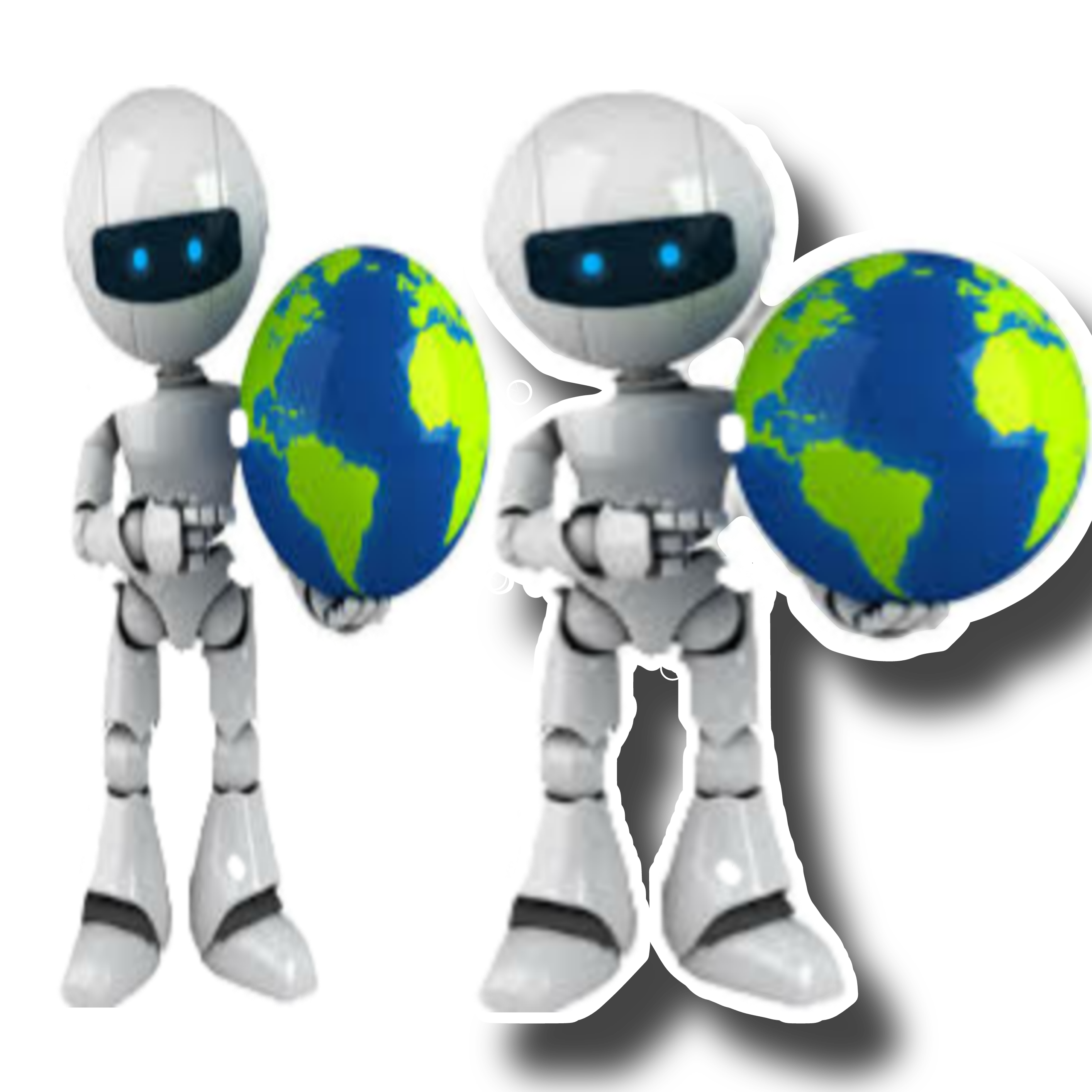
The Chronology of Technology and Artificial Intelligence in Modern Society
The evolution of technology has shaped every generation differently, but none more rapidly than the present one. Many of today’s citizens grew up witnessing continuous growth at every stage of life socially, economically, and intellectually. This transformation stands in sharp contrast to the 19th century, when technology was still at an early stage of development and human labor remained the backbone of productivity.
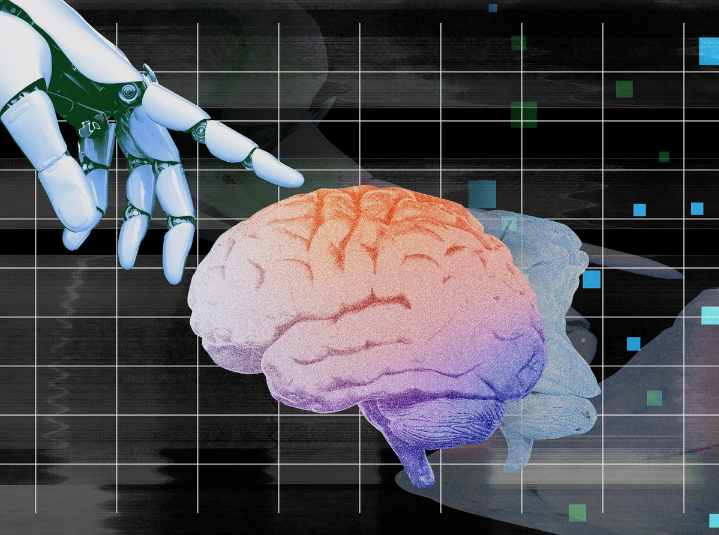
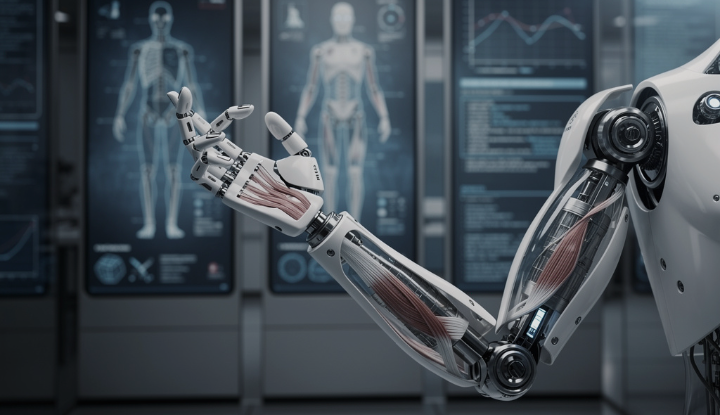
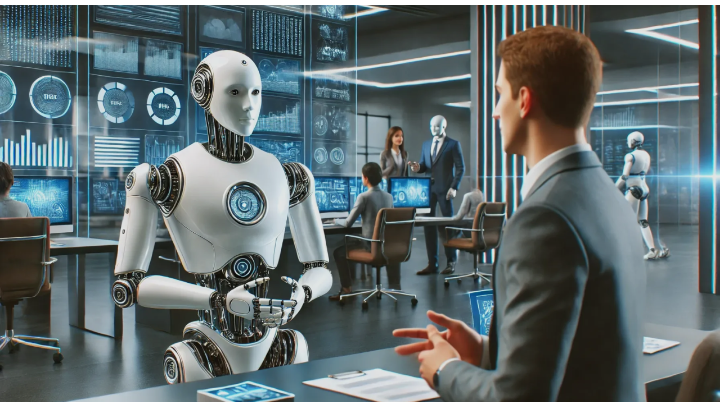
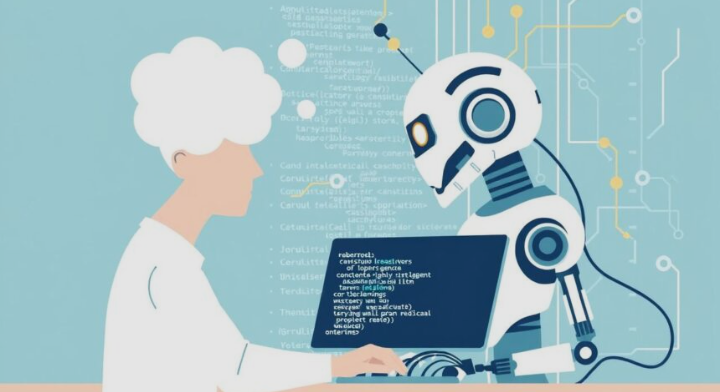
In the 21st century, technology has advanced beyond simply assisting humans; it has begun to replace them. Artificial Intelligence (AI), robotics, and automation now perform tasks once thought impossible for machines. From decision-making systems to autonomous machines, technology has extended human capability while simultaneously raising concerns about relevance, employment, and identity.
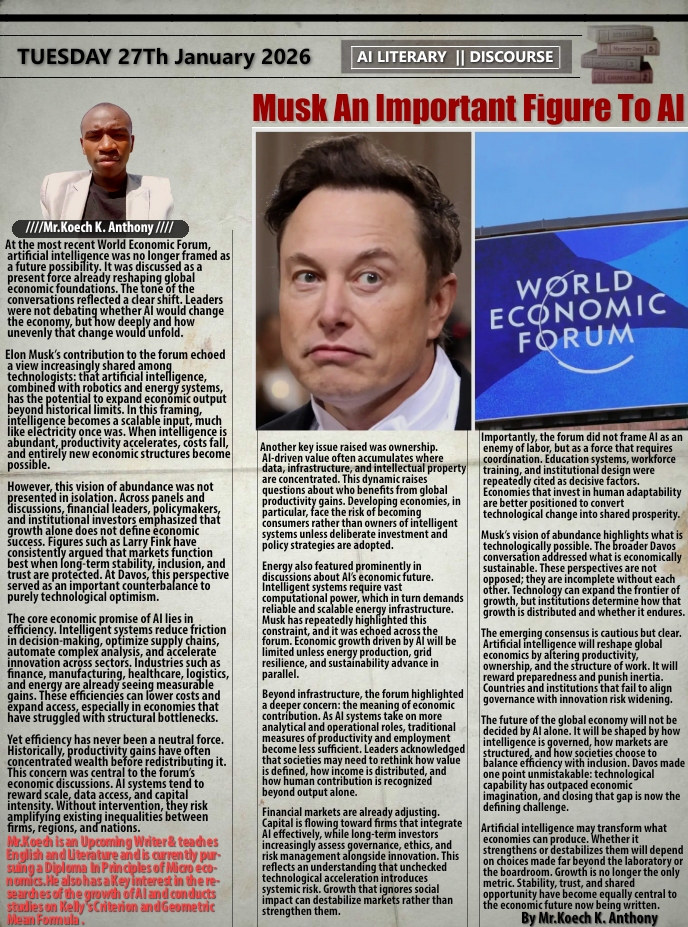
Speaking recently, technology entrepreneur Elon Musk stated that artificial intelligence and robotics could soon make work optional. He described the rapid growth of AI as a “supersonic tsunami” and warned of an approaching “technological singularity” a moment when artificial intelligence surpasses human intelligence and permanently alters the course of civilization. While these developments are praised for efficiency and innovation, Musk has also consistently warned that AI could pose an existential threat to humanity if left unchecked.
These warnings bring into focus the growing tension between technological progress and human welfare. As AI systems become more capable, industries increasingly rely on automation to reduce costs and increase productivity. While this may benefit corporations and economies in the short term, it presents a serious challenge to the job market. Many traditional jobs are disappearing, and new ones often require advanced technical skills that large portions of the population do not possess.
In developing countries such as Kenya, this challenge is even more pronounced. The government continues to invest heavily in education, allocating more than half of its development focus toward preparing young people for the future. However, as technology rapidly replaces human labor, questions arise about the sustainability of this investment. What happens when educated graduates find that machines have taken the very jobs they were trained to perform?
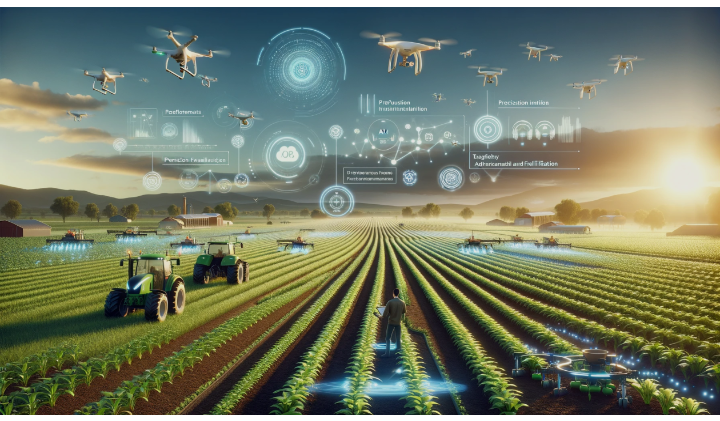
Unemployment rates continue to rise as automation expands into sectors such as manufacturing, agriculture, banking, and even creative industries. The risk is not only economic but social. A society where people feel displaced and undervalued is vulnerable to frustration, inequality, and instability. The danger lies not in technology itself, but in the failure to ensure that technological progress works for humanity rather than against it.
Africa at large faces a similar dilemma. While the continent is rich in youthful potential and human capital, it risks becoming a consumer rather than a controller of advanced technologies. Without deliberate policies to balance innovation with human-centered development, entire populations may be left behind in the race toward automation.
There is an urgent need to rethink how AI is integrated into society. Instead of replacing human effort entirely, technology should complement and enhance it. Ethical frameworks, inclusive policies, and re-skilling programs must be prioritized to protect human dignity and economic participation. Progress should not be measured solely by efficiency, but by how well it serves people.
As artificial intelligence continues to solve complex problems—from medical diagnosis to climate modeling it leaves behind a deeper question. If machines can solve the puzzles of science, industry, and data, who will solve human problems such as unemployment, inequality, purpose, and social responsibility?
Technology may shape the future, but humanity must decide its direction. The challenge before us is not whether AI will advance, but whether society is prepared to ensure that progress remains humane, inclusive, and just.
The evolution of technology has shaped every generation differently, but none more rapidly than the present one. Many of today’s citizens grew up witnessing continuous growth at every stage of life socially, economically, and intellectually. This transformation stands in sharp contrast to the 19th century, when technology was still at an early stage of development and human labor remained the backbone of productivity.
In the 21st century, technology has advanced beyond simply assisting humans; it has begun to replace them. Artificial Intelligence (AI), robotics, and automation now perform tasks once thought impossible for machines. From decision-making systems to autonomous machines, technology has extended human capability while simultaneously raising concerns about relevance, employment, and identity.
Speaking recently, technology entrepreneur Elon Musk stated that artificial intelligence and robotics could soon make work optional. He described the rapid growth of AI as a “supersonic tsunami” and warned of an approaching “technological singularity” a moment when artificial intelligence surpasses human intelligence and permanently alters the course of civilization. While these developments are praised for efficiency and innovation, Musk has also consistently warned that AI could pose an existential threat to humanity if left unchecked.
These warnings bring into focus the growing tension between technological progress and human welfare. As AI systems become more capable, industries increasingly rely on automation to reduce costs and increase productivity. While this may benefit corporations and economies in the short term, it presents a serious challenge to the job market. Many traditional jobs are disappearing, and new ones often require advanced technical skills that large portions of the population do not possess.
In developing countries such as Kenya, this challenge is even more pronounced. The government continues to invest heavily in education, allocating more than half of its development focus toward preparing young people for the future. However, as technology rapidly replaces human labor, questions arise about the sustainability of this investment. What happens when educated graduates find that machines have taken the very jobs they were trained to perform?
Unemployment rates continue to rise as automation expands into sectors such as manufacturing, agriculture, banking, and even creative industries. The risk is not only economic but social. A society where people feel displaced and undervalued is vulnerable to frustration, inequality, and instability. The danger lies not in technology itself, but in the failure to ensure that technological progress works for humanity rather than against it.
Africa at large faces a similar dilemma. While the continent is rich in youthful potential and human capital, it risks becoming a consumer rather than a controller of advanced technologies. Without deliberate policies to balance innovation with human-centered development, entire populations may be left behind in the race toward automation.
There is an urgent need to rethink how AI is integrated into society. Instead of replacing human effort entirely, technology should complement and enhance it. Ethical frameworks, inclusive policies, and re-skilling programs must be prioritized to protect human dignity and economic participation. Progress should not be measured solely by efficiency, but by how well it serves people.
As artificial intelligence continues to solve complex problems—from medical diagnosis to climate modeling it leaves behind a deeper question. If machines can solve the puzzles of science, industry, and data, who will solve human problems such as unemployment, inequality, purpose, and social responsibility?
Technology may shape the future, but humanity must decide its direction. The challenge before us is not whether AI will advance, but whether society is prepared to ensure that progress remains humane, inclusive, and just.